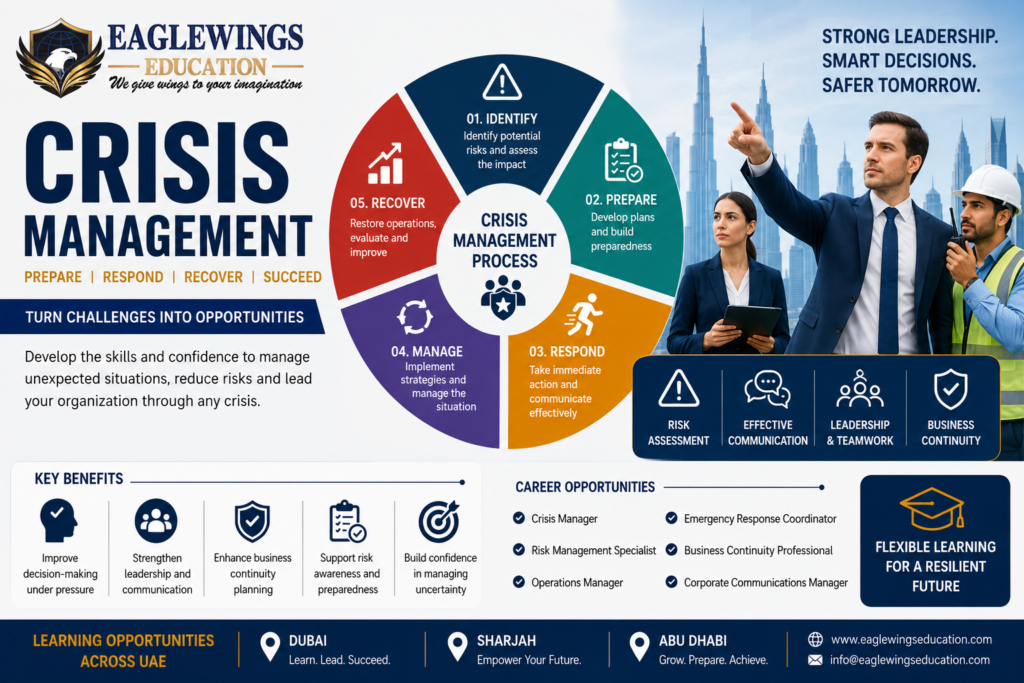
Crisis Management
In UAE helps students and professionals develop the ability to prepare for unexpected challenges, respond effectively and maintain organizational stability. At Eagle Wings Education, learners can strengthen leadership, communication and decision-making skills through practical and future-focused learning opportunities.
What is Crisis Management?
Crisis management is the process of identifying potential risks, preparing response strategies and managing unexpected situations effectively. Organizations use crisis management to reduce disruption, protect operations and maintain continuity during challenging circumstances.
Why Study Crisis Management?
Crisis management skills are valuable across industries including business, healthcare, education, government, operations and technology. Learning how to assess risks and respond strategically supports stronger outcomes and long-term resilience.
Benefits:
 Improve decision-making under pressure Strengthen leadership and communication Enhance business continuity planning Support risk awareness and preparedness Build confidence in managing uncertainty
Core Areas of Crisis Management
• Risk Identification and Assessment
• Emergency Planning
• Crisis Communication
• Incident Response
• Business Continuity Planning
• Recovery and Evaluation
Essential Crisis Management Skills
Students can develop practical abilities including:
• Strategic thinking
• Leadership and coordination
• Problem-solving
• Stakeholder communication
• Risk evaluation
• Team management
Career Opportunities
Possible pathways include:
• Crisis Manager
• Risk Management Specialist
• Operations Manager
• Emergency Response Coordinator
• Business Continuity Professional
• Corporate Communications Manager
Learning Opportunities Across UAE
Students and professionals in Dubai, Sharjah and Abu Dhabi can explore flexible educational opportunities designed to support career growth and professional development.
Conclusion:
Effective crisis management supports organizations in adapting to change and responding to challenges with greater confidence. Developing these skills helps professionals strengthen planning, improve communication and create more resilient environments. For More information click here